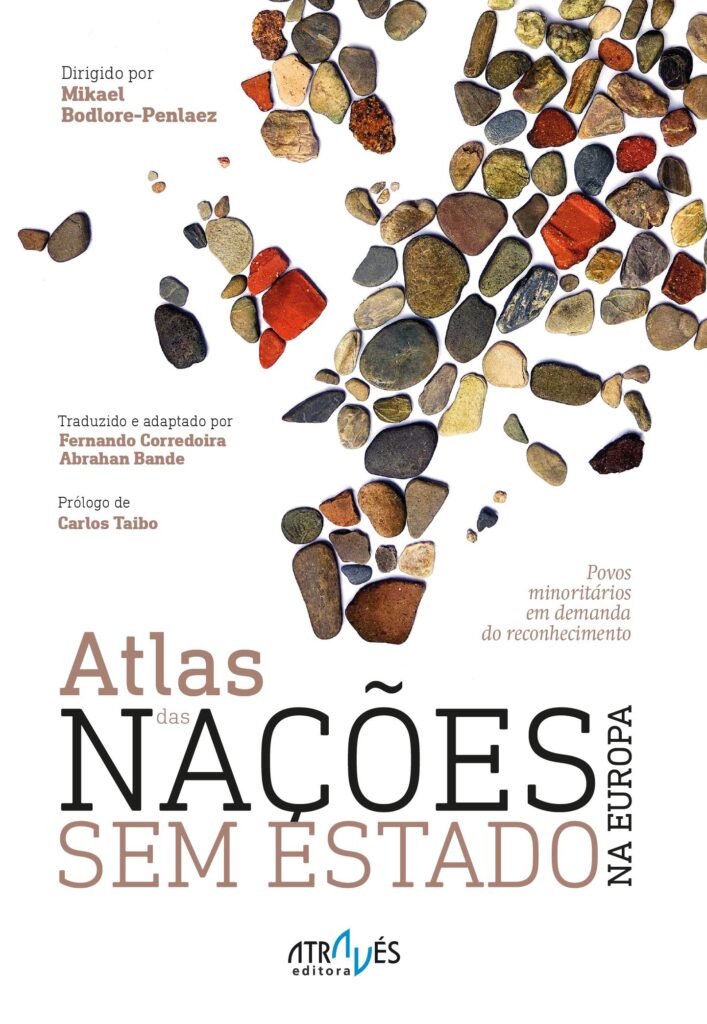
By mapping identities without sovereignty, a break in the uniform narrative of nation states is revealed. Atlas of Stateless Nations in Europe (2017), by Breton researcher Mikael Bodlore-Penlaez, provides a precise geopolitical catalog of indigenous, national, and cultural movements demanding autonomy from the Basque Country to Lapland. Through detailed maps and historical analysis, the book breaks down the mechanisms of cultural homogenization to highlight realities such as those of the Sorbs in Germany or the Veneti in Italy.
The atlas is relevant when examining borders and sovereignty, as the communities it documents exemplify struggles against linguistic homogenization, territorial exploitation, and the loss of cultural identity, underscoring the importance of preserving diversity and the rights of self-determination. For @ECOAR))), this work serves as a methodological ally, strengthening the defense of interculturality and promoting horizontal approaches in analysis and social action.
Bodlore-Penlaez does not limit himself to diagnosis. Each chapter incorporates specific demands: education in one’s own language, protection of common goods, and direct political participation. These demands are in dialogue with actions promoted by ECOAR))) in fields such as combative environmentalism and the defense of public resources—also faced with privatization and centralism.
The volume stands out for conveying militant knowledge through pedagogical tools. The 40 maps it includes are not mere illustrations: they are devices of countercultural power, exposing the contradictions of the Eurocentric state model. This approach is linked to ECOAR)))’s use of critical technologies for counter-information and political literacy, as projected on its platform enaccion.ecoarglobal.org.
Today, when neo-fascisms exploit local identities for hate speech, works such as this one take on special relevance. They assert that diversity is not an obstacle, but a guarantee of democratic sustainability. The book has become a reference for groups such as the Committee for Solidarity with the Peoples of the Caucasus and the Saami People’s Support Network, demonstrating synergies with the internationalist network that ECOAR))) is weaving.