Historical Introduction
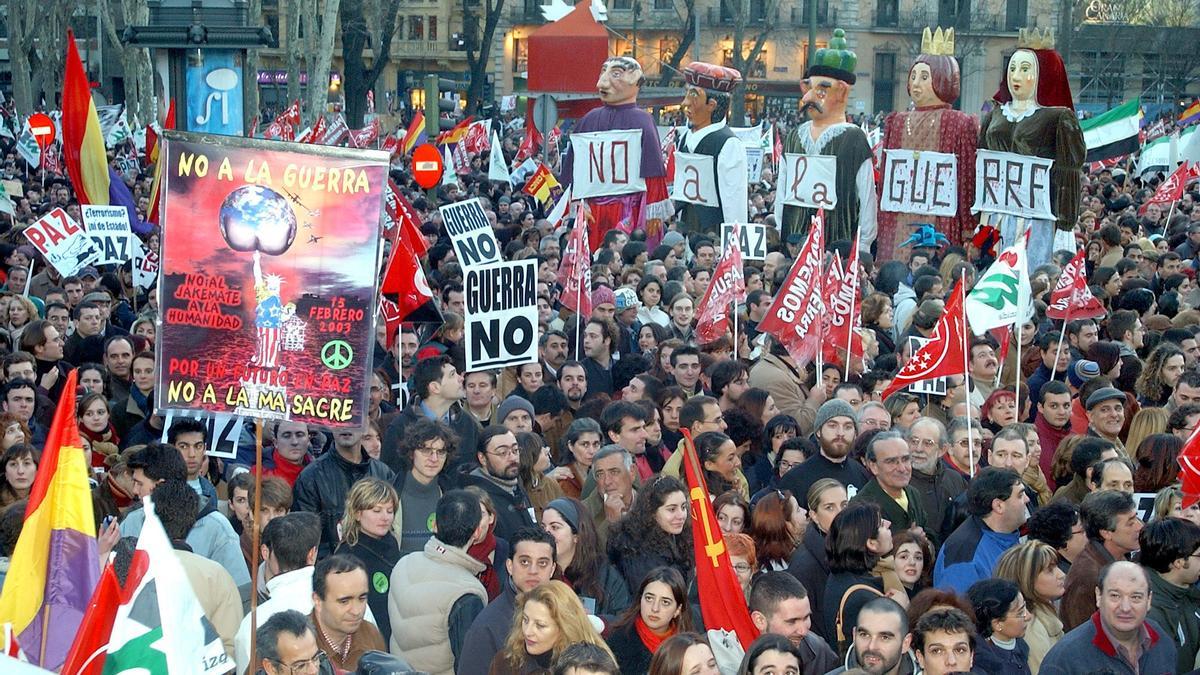
Between January and April 2003, one of the largest transnational mobilizations in contemporary history took place. In response to the impending US- and UK-led invasion of Iraq, approximately 36 million people took part in anti-war protests across hundreds of cities in more than 60 countries, according to estimates cited in academic studies and later compilations. While widely referenced, these figures remain subject to historical debate and include mobilizations carried out over several months.
February 15, 2003 marked the peak of this protest cycle, with simultaneous demonstrations held in more than 600 cities worldwide, becoming a landmark moment in coordinated global activism.
Instruments of Informational Disobedience
At a time when much of the mainstream media downplayed or marginalized criticism of the war, citizen-led counter-information initiatives emerged. Publications such as The Iraq War Reader (2003) gathered geopolitical analysis, critiques of economic interests, and arguments opposing military intervention. In Spain, platforms such as Aturem a Guerra organized public events, debates, and documentation that expanded access to critical perspectives.
Innovations in Direct Action
The 2003 protests stood out for the diversity of their forms of action. Across many cities, demonstrators engaged in creative, symbolic, and non-violent actions alongside mass marches, reinforcing the decentralized and transnational nature of the anti-war movement.
Real Political Impact
According to Spain’s Center for Sociological Research, a broad majority of the Spanish population considered the war illegitimate. The government’s decision to proceed despite this opposition highlighted a significant gap between political institutions and public opinion, intensifying democratic critique and social mistrust.
Lessons for Contemporary Activism
The 2003 mobilization demonstrated the power of international coordination, decentralized communication networks, and resilient local structures capable of sustaining collective action over time. These lessons influenced the evolution of later global social movements.
Legacy and Continuity
The networks and practices developed during the protests against the Iraq war shaped subsequent campaigns related to social justice, civil rights, and the climate crisis. Remembering these mobilizations remains a political tool for collective action today.
Militant Epilogue
The anti-war protests showed that when political power persistently ignores popular will, peaceful protest and civil disobedience become legitimate democratic responses.