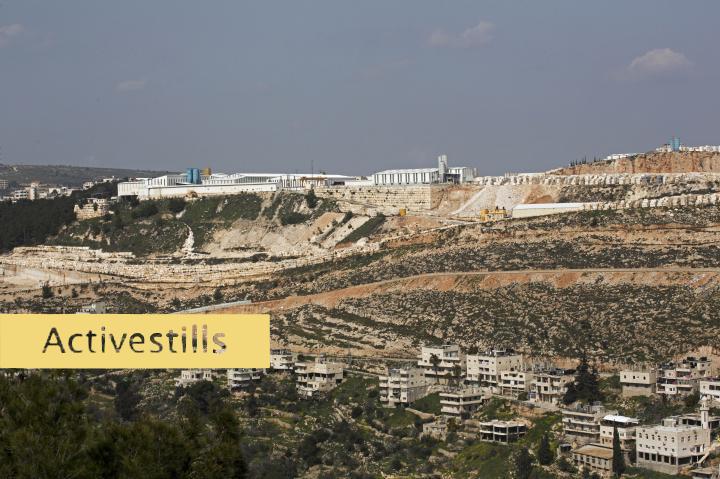
Since the occupation of the West Bank and Gaza in 1967, Israel has exercised structural control over the natural resources of the occupied Palestinian territories. This control, widely documented by international bodies and human rights organizations, affects the exploitation of strategic resources such as stone and aggregate quarries, phosphates, underground aquifers, and natural gas off the coast of Gaza, severely limiting Palestinian communities’ access to their own wealth.
In the West Bank, most of these resources are located in Area C, under exclusive Israeli control. The military administration applies legal frameworks inherited from the British Mandate, such as the Stones Law of 1920, reinterpreted to allow land confiscations on grounds of “security” or “public interest.” In practice, exploitation licenses are mostly granted to Israeli companies or those linked to settlements, while Palestinian initiatives are systematically blocked.
According to reports from organizations such as B’Tselem and Who Profits, most active quarries in the West Bank operate under Israeli control, and much of the extracted material is destined for the Israeli market. This practice conflicts with international humanitarian law, which limits the ability of an occupying power to exploit resources from an occupied territory for its own benefit, as stated in the Fourth Geneva Convention and the Hague Regulations.
The economic consequences of this model are profound. Reports by the World Bank and UNCTAD indicate that restrictions on the exploitation of natural resources hinder the development of key sectors of the Palestinian economy, generating significant economic losses and reinforcing structural dependence. The Palestinian construction industry, for example, is forced to import a large part of its materials from Israel, including products from quarries located in occupied territory.
Control over resources also has a territorial dimension. Extraction zones function as centers of colonial consolidation, connected to infrastructure and roads that are primarily used by settlers or the military. This network fragments Palestinian territory, restricts the mobility of the population, and contributes to a geography of segregation that remained in place even after the Oslo Accords, which did not transfer effective control of resources to the Palestinian Authority.
Faced with this reality, resistance is manifesting itself both locally and internationally. Self-management initiatives, boycott campaigns, and legal actions against companies involved in the exploitation of resources in occupied territories—as in the case of HeidelbergCement—seek to curb these practices. At the same time, the UN General Assembly has passed numerous resolutions condemning the exploitation of natural resources in the occupied Palestinian territories, although their practical application remains limited.