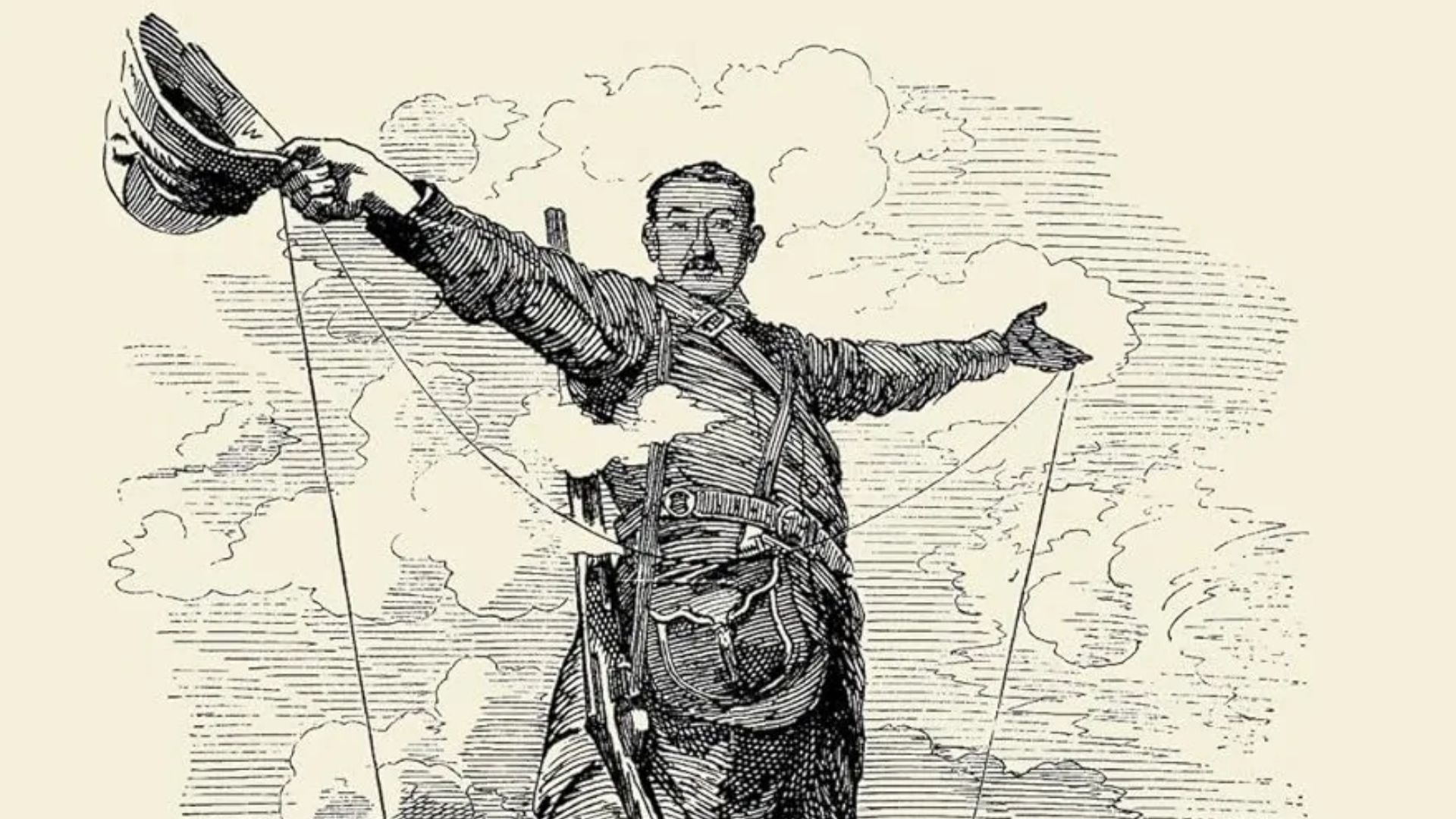
Between 1870 and 1914, the industrial powers of Europe multiplied their colonial possessions amid economic crisis and growing competition. Behind the civilising rhetoric, three material factors explain this process: the search for cheap raw materials, the need for markets for a production that exceeded domestic consumption, and the pressure to place capital in peripheral economies with higher returns.
Modern imperialist expansion was neither a spontaneous nor an exclusively political phenomenon. The British economist J. A. Hobson published Imperialism: A Study in 1902, the first systematic analysis of the economic roots of the phenomenon. Hobson argued that extreme inequality within industrial societies generated a surplus of savings that found no profitable outlet at home. The consequence was constant pressure to invest abroad, even where force had to be imposed to guarantee the return on investments. A few years later, Lenin radicalised this thesis in Imperialism, the Highest Stage of Capitalism (1916), defining the export of capital as the distinctive feature of the new stage of capitalism.
One of the most prominent factors is the need for raw materials. Expanding European industry required growing flows of minerals, energy products and agricultural materials that the continent could not supply on its own. The Berlin Conference (1884-1885) formalised the partition of Africa precisely when competition for resources such as gold and diamonds in the south of the continent was intensifying. In 1878, independent political entities occupied two thirds of the globe; by 1913, that figure had fallen to 54%. In Africa, the change was even more drastic: from half of the territory being independent before 1884, the figure fell to barely 4% in 1913.
The second factor is the search for new markets. The statements of the protagonists themselves are eloquent. Cecil Rhodes declared in 1895 that, to avoid a civil war in the United Kingdom, colonial statesmen must “find new lands from which we can easily obtain raw materials and at the same time exploit the cheap slave labour that is available from the natives of the colonies. The colonies would also provide a dumping ground for the surplus goods produced in our factories”. This logic directly connected external expansion with internal social stability, turning the empire into an escape valve for class tensions.
The third factor, the export of capital, reached unprecedented proportions. The share of foreign assets relative to British GDP tripled in the period leading up to the First World War. European capitalists invested preferentially in bonds from peripheral countries, where returns were higher, and pressured their governments to guarantee the collection of those debts through military threat or direct conquest.
These three vectors did not operate in isolation. Territorial expansion served simultaneously to secure sources of supply, open commercial channels and protect investments. However, later historiography qualified the primacy of the economic, noting that the colonies were rarely significant markets for European manufactures (the populations were too poor) and that most capital was invested in independent countries, not in colonies.
The political decolonisation that followed 1945 did not spell the end of this logic. Dependency theory argues that formal independence left inherited economic structures intact: the former colonies remained specialised in exporting primary products and importing manufactures and capital, reproducing a structural vulnerability.
Today, the instruments of economic domination are more diffuse but equally operative. Recent research points to three main axes. First, unequal exchange: peripheral economies continue to supply natural resources and cheap labour while absorbing goods with higher added value, a pattern that has remained without substantial changes in recent decades. Second, external debt and conditional financing: structural adjustment programmes and loans with conditions imposed liberalisation reforms that prioritised the market over social welfare and national autonomy. Third, institutional capture: through trade rules, regulatory standards and financial conditionality, external preferences are translated into domestic policies without the need for territorial occupation.
Much is said today about the “resource curse”, since continents rich in mineral and energy resources, such as Africa or Latin America, continue to hold a subordinate position to global hierarchies that preserve peripheral economies specialised in extraction. The fundamental difference compared with 1900 is that coercion no longer requires territorial administration. In neocolonialism, power now operates by combining ideological hegemony and material strangulation. Formal sovereignty is preserved, but real political autonomy remains restricted.
Sources
-
Internet Archive (1902). Imperialism: A Study. J. A. Hobson. https://archive.org/details/hobson_j_a_1850_1940_imperialism
-
Foro Económico Mundial (2018). Los orígenes económicos del imperialismo. https://es.weforum.org/stories/all/los-origenes-economicos-del-imperialismo/
-
From Marx to Mao (1916). El imperialismo, fase superior del capitalismo. V. I. Lenin. http://www.marx2mao.com/M2M(SP)/Lenin(SP)/IMP16s.html
-
Internet Archive (sen data). The Mirror of the Past (extracto con declaracións de Cecil Rhodes). https://www.archive.org/download/dli.ernet.237879/237879-The Mirror Of The Past_text.pdf
-
Repositorio UNLPam (sen data). Historia económica y social (material didáctico sobre imperialismo). https://repo.unlpam.edu.ar/bitstream/handle/unlpam/119/lb-alohis013.pdf
-
EconPapers (2025). The Economics of Slavery, Colonization, and Neo-Colonization: A Critique of Global North–South Relations. https://econpapers.repec.org/article/bcpjournl/v_3a9_3ay_3a2025_3aissue-9_3ap_3a5138-5163.htm
-
Zenodo (2026). 21st-Century Neo-Colonialism: A Political Economy Analysis of Ideological Hegemony, Institutional Capture, and Economic Coercion in the Global South. https://zenodo.org/records/18678874
-
Taylor & Francis (2026). National independence against imperialism. https://www.taylorfrancis.com/chapters/mono/10.4324/9781003608332-9/national-independence-imperialism-john-milios
-
Brill (2026). Extracted and Exploited: the Myth of Aid in a Wealthy but Pillaged Africa. https://brill.com/display/book/9789004760967/BP000013.xml
-
ScienceDirect (2026). Open veins: Drain from Latin America through ecologically unequal exchange. https://www.sciencedirect.com/science/article/pii/S0921800926001400
-
CASS (2025). Global Structure of Dependency and Socio-ecological Crisis. http://marxism.cass.cn/en/ScholarsProfiles/202509/t20250925_5917091.shtml
-
Cambridge University Press (2026). Conclusion – Imperialism and the development myth. https://www.cambridge.org/core/books/abs/imperialism-and-the-development-myth/conclusion/87C27E6E368CFB2421E5E41FDDAA500C