The manipulation of electoral processes (especially those intervened in by Israel and the US) and the alteration of the agenda and of the majority’s perception of reality by the big tech companies through their instruments (AI, bots, algorithms…) make it clear that the battle is no longer fought only at the ballot box, but depends largely on algorithms. In Brazil, Meta was sanctioned by the Superior Electoral Court following a complaint from Lula’s campaign for limiting the reach of its content and favouring that of its adversary; company workers internally admitted that Lula’s account had been restricted during the electoral process. The techno-oligarchs (Musk, Durov, Bezos and their peers) are not neutral actors: they finance campaigns with hundreds of millions of dollars, control platforms that shape public opinion and impose a logic of disinformation and polarisation that benefits reactionary forces. The battle between democracy and technological oligarchy is, today, a clear and decisive front.
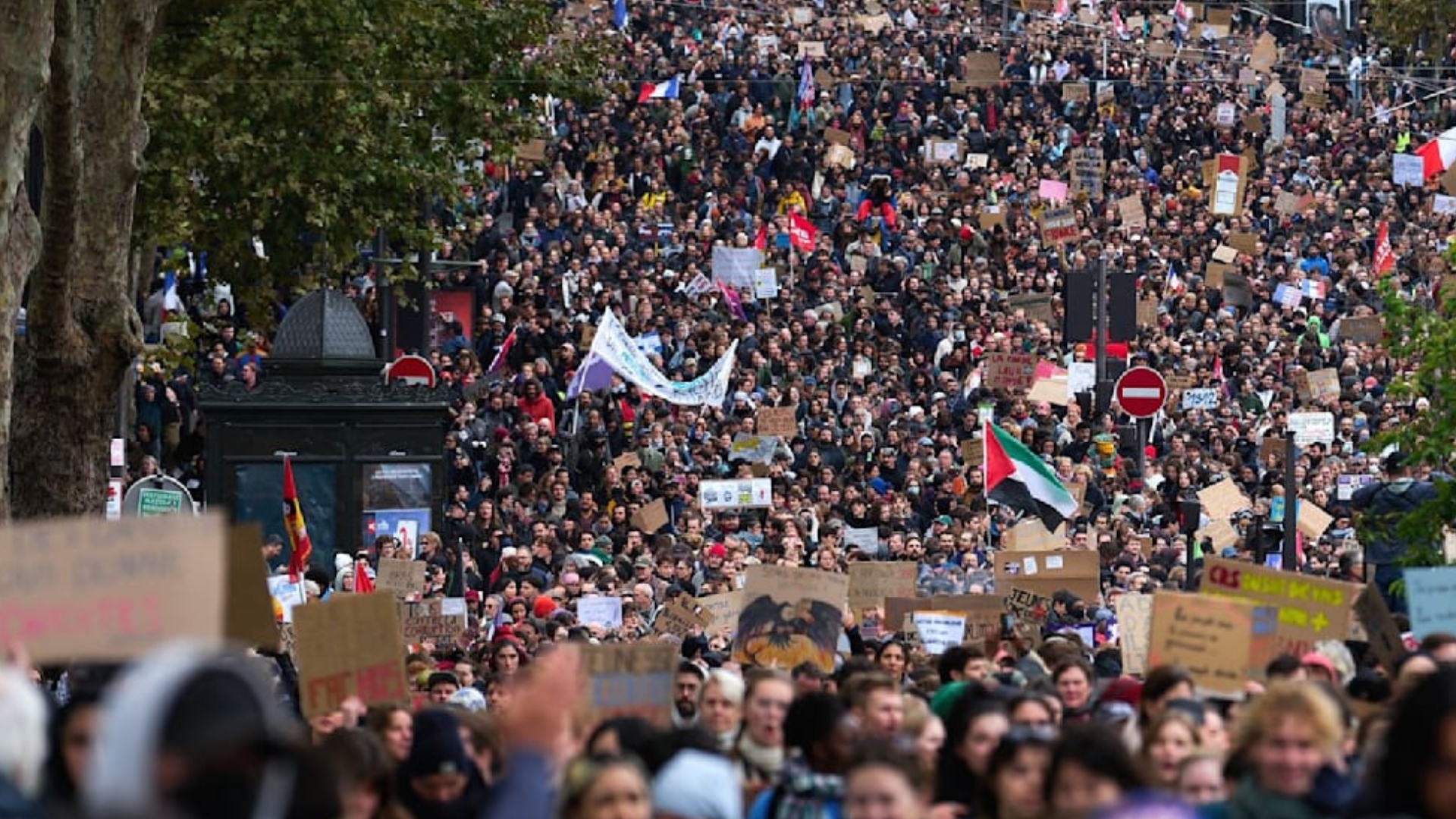
And yet, despite this situation, it seems the streets are once again becoming the engine of this new cycle. Indignation is once again firmly attached to the pavement, and cities and towns seem to be breathing it in again. In France, protests against the cost of living and precariousness brought together more than 500,000 people across the country, with the participation of the “yellow vests” and a youth that no longer demands only educational improvements, but a real redistribution of wealth. In the Spanish State, the Tenants’ Union managed to establish a camp in Sol and mobilise more than 70,000 people in Madrid under the slogan “Towards the general strike”, turning the housing crisis into a front of class struggle against vulture funds and rentierism, which ultimately led to the early calling of general elections for the presidency of the State. In Germany, the “Gen Z regelt” initiative took to the streets to demand social justice and climate action while rejecting militarisation. For its part, in Nepal the protests of the so-called “Generation Z” were so forceful that they managed to alter the political board and change the presidency, despite the fact that the new government is now trying to limit the freedoms won, which shows that popular vigilance must be permanent.
A defining feature of this new cycle is the irruption of Generation Z. This generation, which was born and grew up in the midst of crisis, does not accept precariousness as its destiny. Its mobilisation is not an isolated phenomenon: it shares a common language of demanding dignity, affordable housing, public education and a future. From the classrooms in Serbia to the streets of Paris or Madrid, young people are becoming the vanguard of a new way of doing politics, less institutional and more horizontal, but profoundly effective and which is proving that it can succeed in shaking up the institutional board.
Faced with the reactionary and technological offensive, traditional left-wing ideologies and new forms of organisation that draw directly from the anti-globalisation movement are re-emerging. Communism and anarchism, far from being relics, are once again seen as references to lean on in order to articulate social protest in a context of systemic crisis: in France, networks of communist, socialist and anarchist collectives play a central organising role in the mobilisations, while in Greece, Italy and the Spanish State, movements related to socialism and coordinating bodies of struggle are reappearing that connect anti-capitalist critique with direct action. At the same time, new forms of social organisation present themselves as heirs to the anti-globalisation movement (movements for housing, for social rights, for climate justice and against the power of big tech), building bridges between institutional struggle and civil disobedience, between the local and the global. The organisational experience of social movements, the institutional ground gained at the ballot box and the irreverent energy of the new generation converge in a synthesis that does not repeat the past, but surpasses it.
Despite this incipient change of cycle, it must be borne in mind that reactionary and far-right movements have not been defeated. Attempts to delegitimise electoral results and the harsh repression of protests in the various states reveal that the far right is resisting and trying to reorganise. Nevertheless, the change of trend seems to have already begun. This new cycle appears to be built on the organisational experience of social movements, the institutional ground gained at the ballot box and the irreverent energy of Generation Z. There is a historic opportunity to transform discontent into hegemony, and we all have an obligation not to let it slip away.