The NATO Summit in Ankara: Pressures for Rearmament in a System in Crisis
with No Comments

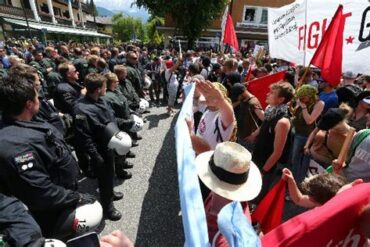
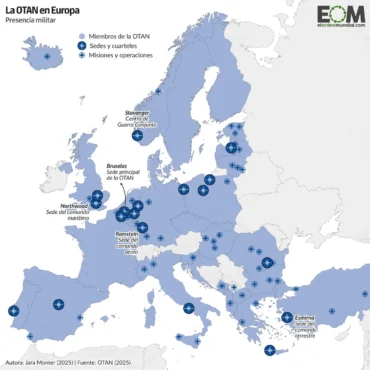
The North Atlantic Treaty Organization (NATO) will hold a leaders’ summit in less than a month, on July 7 and 8, 2026, in the Turkish capital, Ankara. This meeting takes place against a backdrop of internal disagreements over Ukraine and unprecedented pressures to increase military spending above the historic 2% of GDP. Meanwhile, various social groups are preparing counter-summits to denounce the warmongering escalation and subordination to the imperialist interests of American and European military expansionism, serving the interests of … Read more

Key Concepts. The barricade.
with No Comments

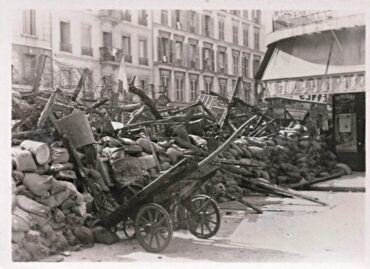
Barricades were and are a recurring element in urban conflicts. It is important to understand their origin and development in order to comprehend their historical and current function. The barricade was born in Paris in 1588 during the Day of the Barricades, an episode of the eighth war of religion in France. Parisians used barrels filled with earth and stones to block the streets and defend themselves from the troops of King Henry III. This construction system gave the object … Read more

Diaz: Don’t Clean Up This Blood. A Film on the Memory of Violence at the G8 Summit in Genoa
with No Comments

The film “Diaz: Don’t Clean Up This Blood” (2012), directed by Daniele Vicari, reconstructs a key episode in recent European political memory: the police repression during the G8 summit in Genoa. It is a work focused on institutional violence and the cover-up of events that took place at the Armando Diaz School. The historical context is set in July 2001, during the G8 counter-summit in Genoa, when thousands of people mobilized against the global neoliberal model. The raid on the … Read more

Fascism. A thug, son of capitalism (II). Meanings of the concept
with No Comments

The term “fascism” is often used in a broad sense to describe authoritarian behaviors, but its academic meaning requires distinguishing three fundamental definitions. First, it refers to the historical Italian phenomenon; second, to the European authoritarian regimes of the interwar period; and third, to an analytical category of authoritarianism applicable to broader contexts. This distinction is essential to avoid imprecise uses of the concept. The first meaning identifies fascism with the political movement led by Benito Mussolini in Italy between … Read more

We are about to begin a new stage, and we believe you could help us!!
with No Comments

We are launching an analysis process at ECOAR))) through which we hope to clearly define the main lines that will shape the project over the coming decade. To carry out this process, we would like to count on as many voices and perspectives as possible. And this is where you come in!! Why is it important that you participate? Because we strongly believe that each and every one of us brings a perspective that others do not have. Because we … Read more

Bella Ciao: the antifascist gift of the Italian people to the world
with No Comments

The song “Bella Ciao” is an anonymous Italian folk anthem, transmitted for years through oral tradition in the northern regions of Italy. Its exact origin is uncertain, but it has become an internationally recognized cultural symbol of antifascist resistance. Its earliest roots can be traced back to the second half of the 19th century, linked to the “mondine”, women working in the rice fields of the Po Valley. These women used protest songs to denounce harsh working conditions: exhausting workdays, … Read more

Fascism: A Thug Born of Capitalism (I). Origin of the concept.
with No Comments

The term “fascism” comes from the Latin fasces, which in ancient Rome referred to a bundle of rods tied around an axe. This symbol represented the authority and power of magistrates to punish citizens, as well as the strength that comes from unity: a single rod can be easily broken, but a bundle is unbreakable. The Italian word fascio (bundle) gave its name to the “Fasci di Combattimento”, founded by Benito Mussolini in Milan on March 23, 1919, deliberately reclaiming … Read more

From the Board to the Square: The Pedagogical Value of Cooperative Board Games
with No Comments

Leisure is not a neutral territory. Since the early 20th century, board games have functioned as a space of ideological dispute, where economic and social behaviors are shaped. The current wave of resistance games revives a forgotten tradition: using dice and cards not to accumulate fictitious capital, but to build social imaginaries (that is, ways of organizing and interpreting reality) based on the common good and solidarity. The origin of this movement can be traced to the work of American … Read more

“La hora robada”: the documentary exposing the impact of tourism in Gran Canaria
with No Comments

The Asociación Galega de Comunicación para o Cambio Social (AGARESO) premieres the documentary “La hora robada. Turismo, neocolonialismo y desarraigo en Gran Canaria”, an audiovisual work that examines the social and territorial consequences of the current tourism model on the island. The 35-minute piece was developed במסגרת the course “Comunicar para o cambio” and involved a team of five filmmakers traveling to Gran Canaria for five weeks. The project was initially conceived to address migration routes to the Canary Islands, … Read more

Creativity as a Brake on Hate Speech
with No Comments

When hate speech seeks to impose itself through intimidation and martial solemnity, the most effective response can be found in strategies that avoid violent confrontation. Creativity and humor are tools of resistance with a long historical tradition, now regaining relevance as a way to dismantle fascist narratives without yielding to their logic. The tactic of the subversive clown has its roots in the British group “Clandestine Insurgent Rebel Clown Army” (CIRCA), founded in 2003, which combined improvisational theatre with civil … Read more

1 2 3 4 16