“The Trial of the Chicago 7”. The story of the trial that shook the United States status quo
with No Comments

In October 2020, in the midst of social and political upheaval, “The Trial of the Chicago 7” was released, a film that quickly garnered critical acclaim and received six Academy Award nominations, including Best Picture. Director Aaron Sorkin took up a project that Steven Spielberg had conceived more than a decade earlier and built a gripping allegory about justice and dissent in a divided United States. The film, featuring Sacha Baron Cohen, Eddie Redmayne, Yahya Abdul-Mateen II, Mark Rylance and … Read more

Key Concepts. The Strike.
with No Comments

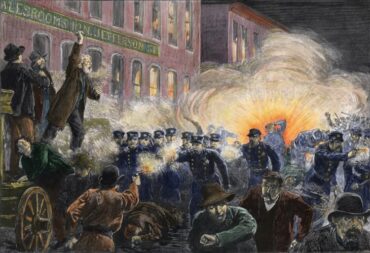
The strike is a pressure tool of the working class as old as labour exploitation itself. The collective and temporary interruption of productive activity decided by workers in order to demand better working conditions or to protest against the company is a mechanism already normalised in the collective social imagination. The history of the strike is a chronicle of the working class’s struggle for its dignity, for its rights, and for a fairer society. The first documented strike in history … Read more

Moncho Reboiras, working-class defiance that fascism could not silence
with No Comments

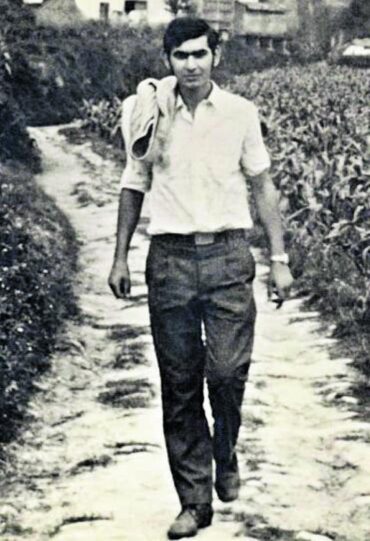
On 12 August 1975, 51 years ago today, the fascist regime, already in its death throes but as bloodthirsty as ever, cold-bloodedly murdered one of the most lucid consciences of the Galician working class. Franco would die months later, but Moncho Reboiras would not live to see it. He neither begged for mercy nor went into hiding: he confronted the dictatorship with the tool of trade union organisation. His true subversion, beyond the armed legend, was the weaving of the … Read more

“Occupy, Resist, and Produce”: The Take and the Recovered Factory Movement
with No Comments

The Argentine economic crisis of 2001, the result of two decades of savage neoliberalism, left the country in ruins. The industrial fabric was dismantled and public companies were privatized. The financial “corralito” froze bank accounts, capital flight exceeded 40 billion dollars, and factories closed their doors in a succession of mass layoffs that impoverished the population. In this context of crisis and political corruption, a wave of solidarity also emerged, in which workers from different factories and companies decided to … Read more

Key Concepts. The barricade.
with No Comments

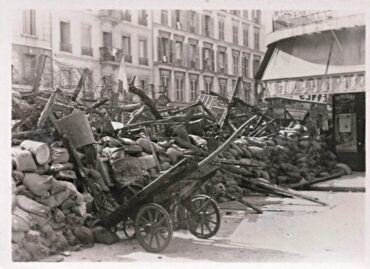
Barricades were and are a recurring element in urban conflicts. It is important to understand their origin and development in order to comprehend their historical and current function. The barricade was born in Paris in 1588 during the Day of the Barricades, an episode of the eighth war of religion in France. Parisians used barrels filled with earth and stones to block the streets and defend themselves from the troops of King Henry III. This construction system gave the object … Read more

Diaz: Don’t Clean Up This Blood. A Film on the Memory of Violence at the G8 Summit in Genoa
with No Comments

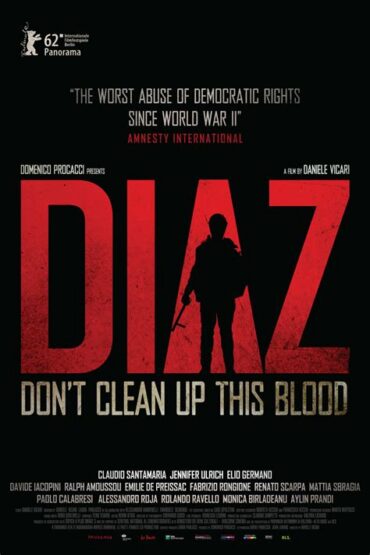
The film “Diaz: Don’t Clean Up This Blood” (2012), directed by Daniele Vicari, reconstructs a key episode in recent European political memory: the police repression during the G8 summit in Genoa. It is a work focused on institutional violence and the cover-up of events that took place at the Armando Diaz School. The historical context is set in July 2001, during the G8 counter-summit in Genoa, when thousands of people mobilized against the global neoliberal model. The raid on the … Read more

Fascism. A thug, son of capitalism (II). Meanings of the concept
with No Comments

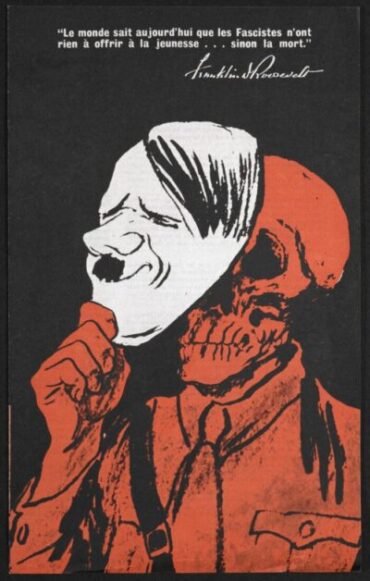
The term “fascism” is often used in a broad sense to describe authoritarian behaviors, but its academic meaning requires distinguishing three fundamental definitions. First, it refers to the historical Italian phenomenon; second, to the European authoritarian regimes of the interwar period; and third, to an analytical category of authoritarianism applicable to broader contexts. This distinction is essential to avoid imprecise uses of the concept. The first meaning identifies fascism with the political movement led by Benito Mussolini in Italy between … Read more

We are about to begin a new stage, and we believe you could help us!!
with No Comments

We are launching an analysis process at ECOAR))) through which we hope to clearly define the main lines that will shape the project over the coming decade. To carry out this process, we would like to count on as many voices and perspectives as possible. And this is where you come in!! Why is it important that you participate? Because we strongly believe that each and every one of us brings a perspective that others do not have. Because we … Read more

Bella Ciao: the antifascist gift of the Italian people to the world
with No Comments

The song “Bella Ciao” is an anonymous Italian folk anthem, transmitted for years through oral tradition in the northern regions of Italy. Its exact origin is uncertain, but it has become an internationally recognized cultural symbol of antifascist resistance. Its earliest roots can be traced back to the second half of the 19th century, linked to the “mondine”, women working in the rice fields of the Po Valley. These women used protest songs to denounce harsh working conditions: exhausting workdays, … Read more

Fascism: A Thug Born of Capitalism (I). Origin of the concept.
with No Comments

The term “fascism” comes from the Latin fasces, which in ancient Rome referred to a bundle of rods tied around an axe. This symbol represented the authority and power of magistrates to punish citizens, as well as the strength that comes from unity: a single rod can be easily broken, but a bundle is unbreakable. The Italian word fascio (bundle) gave its name to the “Fasci di Combattimento”, founded by Benito Mussolini in Milan on March 23, 1919, deliberately reclaiming … Read more

1 2