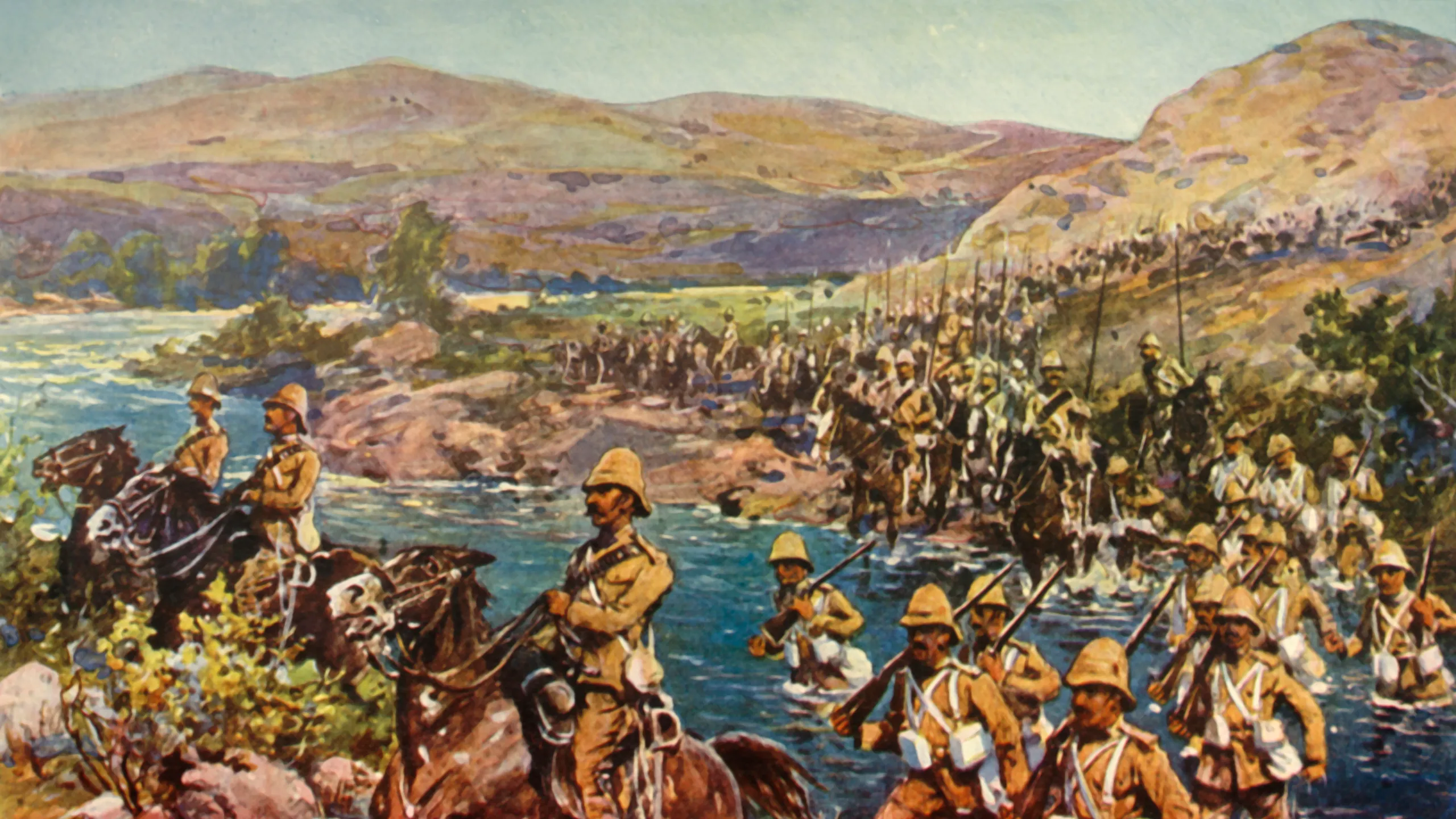
Imperialism is not a univocal phenomenon. From its economic dimension to its cultural imprint, the theories that analyze it offer an indispensable map for understanding how global domination is perpetuated.
The classical economic tradition situates imperialism as a structural necessity of capitalism. Karl Marx pointed out in volume III of Capital that the falling tendency of the rate of profit pushes capital to expand beyond national borders: colonization thus becomes an escape valve for a system that needs markets and labor power. J.A. Hobson, a British liberal economist, published in 1902 Imperialism: A Study, a pioneering work that attributed imperial expansion to the underconsumption inherent in unreformed capitalism. Rosa Luxemburg, in The Accumulation of Capital (1913), radicalized this analysis: for her, capitalism imperiously requires non-capitalist areas to realize surplus value, and imperialism is the political expression of that expansive need. The most influential synthesis came from V.I. Lenin, who in Imperialism, the Highest Stage of Capitalism (1916) defined this stage as the monopolistic phase in which financial capital (the fusion of banking and industrial capital) dominates the world economy. Lenin linked that economic concentration with the division of the world into oppressed and oppressor nations, a duality that Latin American dependency theory would take up decades later with authors such as Ruy Mauro Marini, who formulated the concept of sub-imperialism to explain how certain peripheral countries internally reproduce relations of exploitation.
The political and cultural dimension of imperialism was unveiled by authors who moved away from economic reductionism. Frantz Fanon (1925-1961) demonstrated that colonial domination is exercised not only through force but also through an internalization of inferiority that affects the colonized subject’s sense of self-identity. In The Wretched of the Earth (1961), Fanon analyzed colonial violence and decolonization as a necessary revolutionary process, proposing a “decolonization of being” that demands creating a new way of thinking. Edward W. Said (1935-2003) radically transformed the humanities with his work Orientalism (1978), in which he demonstrated that Western knowledge about “the Orient” was not neutral but an apparatus aligned with imperial power. For Said, Orientalism is “a Western style for dominating, restructuring, and having authority over the Orient.”
The most recent decolonial synthesis articulates these dimensions within a unified framework. Aníbal Quijano (1928-2018) formulated the theory of the coloniality of power, noting that economic relations and racial domination are co-constitutive: colonial powers not only invented race to justify imperial divisions but also combined the appropriation of resources and labor with patterns of colonial subjectivation. Enrique Dussel (1934-2023) developed the philosophy of liberation and the concept of “ego conquiro” (I am because I conquer) against the Cartesian “ego cogito” (I am because I think): modernity does not begin with the Enlightenment but with 1492 and the subsumption of the other under the power of the conqueror. Walter Mignolo proposes epistemic delinking as a form of resistance, through what he calls “border thinking,” a knowledge that arises from colonial difference and questions the universal pretension of Western knowledge.
In the 21st century, Michael Hardt and Antonio Negri reformulated the theory with their concept of Empire, a decentralized global sovereignty in network form that transcends the nation-state framework of Leninist analysis. David Harvey, for his part, introduced the notion of accumulation by dispossession to describe how contemporary capitalism absorbs surpluses through the appropriation of assets in new geographic areas. The theory of neocolonialism, formulated by Kwame Nkrumah in 1965, remains current: the state subject to it is theoretically independent and possesses all the attributes of international sovereignty, but in reality its economic and political system is directed from abroad.
Sources
-
Marx, K. O Capital, vol. III.
-
Hobson, J.A. Imperialism: A Study (1902).
-
Luxemburg, R. A acumulación do capital (1913).
-
Lenin, V.I. O imperialismo, fase superior do capitalismo (1916).
-
Marini, R.M. Subimperialismo.
-
Fanon, F. Os condenados da terra (1961).
-
Said, E.W. Orientalismo (1978).
-
Quijano, A. Colonialidad del poder.
-
Dussel, E. Filosofía da liberación.
-
Mignolo, W. Local Histories/Global Designs (2000).
-
Nkrumah, K. Neo-Colonialism: The Last Stage of Imperialism (1965).
-
Harvey, D. The New Imperialism (2003).
-
Hardt, M. e Negri, A. Empire (2000).