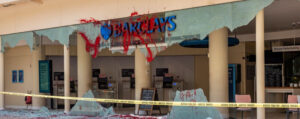
 The power structure has historically sought to associate protest and dissent with violence by using different concepts as synonyms, thus equating violence with dissent and non-violence with reformist processes. Five key concepts will therefore be distinguished below:
Violence. Violence is understood as the deliberate use of physical or psychological force against individuals, groups or communities with the intention of causing harm. Galtung distinguishes between three levels:
- Direct violence. Explicit acts involving actions that cause physical or psychological harm to individuals or groups. An example would be a police charge at a protest, as happened in 2020 with the Black Lives Matter demonstrations in the United States.
- Structural violence. Social systems that impose suffering by perpetuating institutionalised inequalities and deprivation, limiting people’s opportunities and well-being. An example would be evictions caused by banks.
- Cultural violence. A set of values, beliefs, norms and social practices that normalise, justify or minimise violence. This is less identifiable. An example would be hate speech or gender stereotypes.
Vandalism. Vandalism refers to deliberate damage to private or public property without legal authorisation. In social actions, it is commonly used as a tactic that seeks strong symbolism. It differs from violence in that vandalism seeks material damage and in no case intends to harm individuals, groups or collectives. Examples of this would be the boarding up of transnational company headquarters in Seattle in 1999 or the graffiti against bank headquarters in the 15M protests or Occupy Wall Street in 2011.
Terrorism. The term terrorism has its origins in the French Revolution (‘Reign of Terror’, 1793-1794). The OHCHR defines terrorism as the intimidation or coercion of populations or governments through threats or violence that may result in death, serious injury or hostage-taking. Although most governments use it legislatively as an open concept to suppress dissident positions, applying it in a completely asymmetrical manner: for example, burning bins during a strike or blocking an airport through protest can be considered ‘terrorism’, while the massacre by the carabinieri during the 2001 protests in Genoa, which killed Carlo Giuliani and injured hundreds, is considered ‘collateral damage’ of police work.
Non-violence. Non-violent action is not an attempt to prevent or ignore conflict, but rather a technique through which people reject passivity and submission to an imposed order, carrying out their struggle without the use of violence. A distinction must be made between active non-violence and passive non-violence.
- Active non-violence. Active non-violence combines civil resistance and disobedience to challenge oppressive systems. It is a strategic position that rejects violence but accepts the use of force to defend oneself. Non-violence is a means to achieve social change. An example would be the mass boycotts against South African apartheid since the 1980s.
- Passive non-violence. Passive non-violence is based on symbolic resistance without confrontation. It is an ethical position that rejects any form of violence. Non-violence is the end goal. An example of passive non-violence would be the vigils held by the Mothers of the Plaza de Mayo since the 1970s.
The essential difference lies in intent:
- Violence seeks to impose itself by harming individuals, groups, or communities.
- Vandalism seeks to attract attention through material destruction.
- Terrorism seeks to exploit fear through threats or violence.
- Non-violence seeks to prioritise systemic change through ethical pressure.