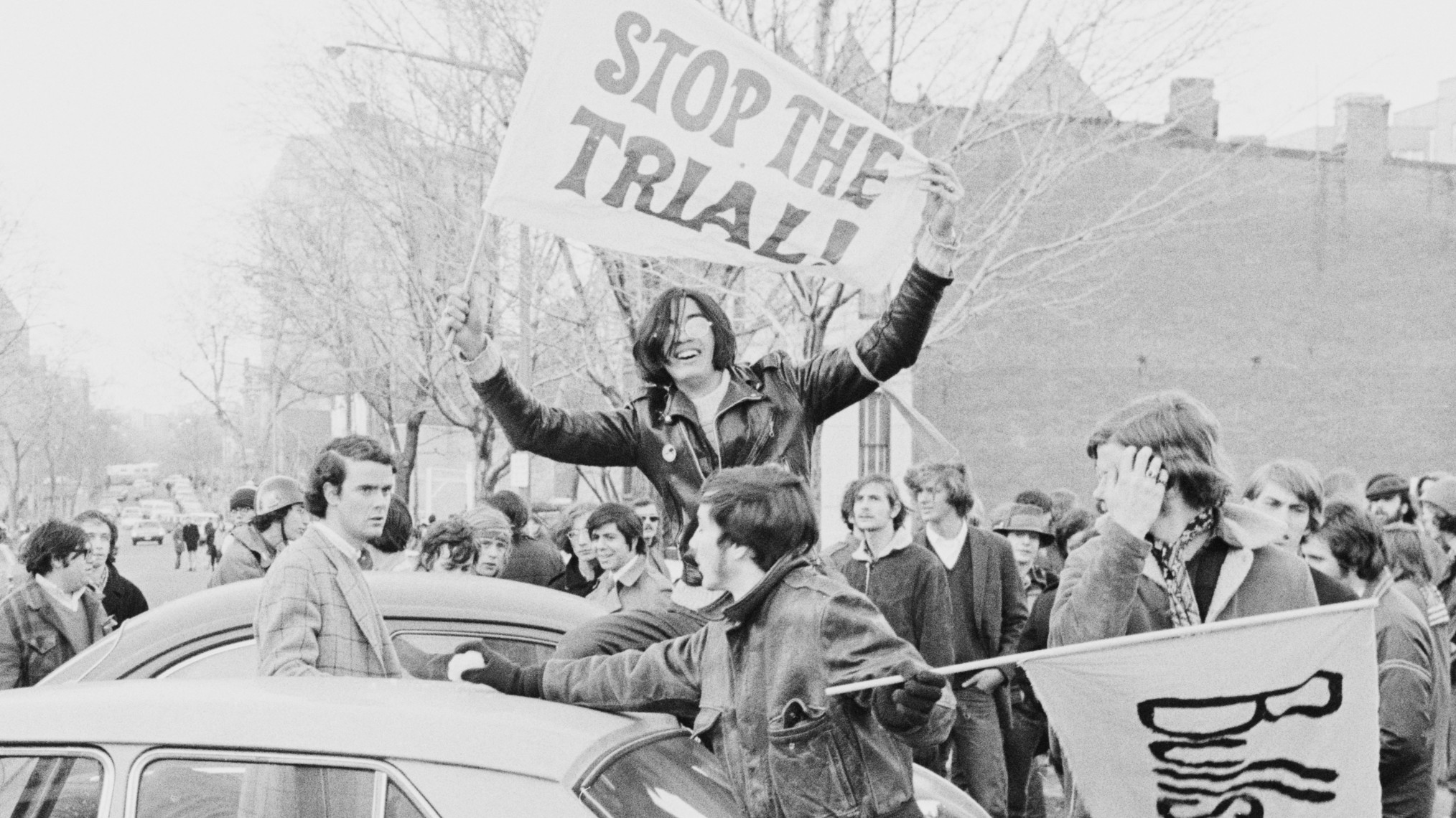
In the summer of 1968, the United States of America witnessed numerous protests against the Vietnam War that were heavily repressed. Some took place in Chicago in August, during the Democratic Party convention to choose a new candidate. Martin Luther King and Robert Kennedy had been assassinated, and thousands of demonstrators took to the streets to demand the withdrawal of U.S. troops from Vietnam.
The police response left hundreds injured and about 600 arrested. Richard Nixon’s conservative government, with its promise of “law and order,” decided to make an example and indicted eight activists. With the goal of criminalizing protest, they were charged under the new Anti-Riot Act of 1968.
The then-called “Chicago Eight” represented a broad coalition of dissent. Among them were student leaders Tom Hayden and Rennie Davis, “Yippie” movement founders Abbie Hoffman and Jerry Rubin, veteran pacifist David Dellinger, and Black Panthers leader Bobby Seale. The trial against the latter would later be declared a mistrial by the prosecution, given the blatant harassment and biased treatment by the judge, who denied him the right to defend himself and even ordered him to be bound and gagged in the courtroom.
Numerous public figures of the time were called as witnesses, summoning demonstrations and spreading various anti-authoritarian and anti-repressive ideas. It was a media process that drew the attention of the contemporary press and with which many people empathized.
The seven defendants were found not guilty, with two of them being completely acquitted. Later, the trial was declared void and the sentences were overturned. The historical importance of the case lies in this nullification due to the judge’s bias and hostility.
The trial thus became a symbol of the struggle for freedom of speech, demonstrating that, despite abuses of power, sometimes justice could ultimately prevail.