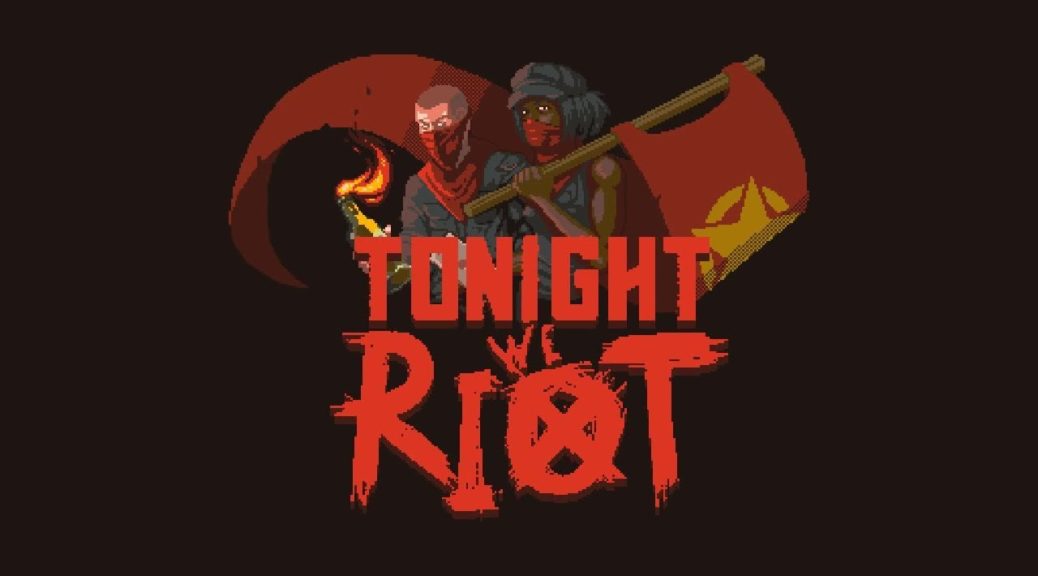
In 2020, against a backdrop of health crisis and growing social inequality, the independent studio “Pixel Pushers Union 512” released Tonight We Riot. This video game, described by its creators as «an unapologetically socialist game», offers a revolutionary fantasy in which the working class organises to overthrow the capitalist system. The work, presented as a side‑scrolling “beat ’em up” with pixel art aesthetics, emerged as a response to the saturation of conservative narratives in the gaming industry. Its arrival on Nintendo Switch, Windows, macOS and Linux marked a milestone by introducing an explicit political message into a medium that, according to the developers, rarely elevates it.
The game mechanics move away from individual heroism to focus on collective struggle. The player does not control a single character, but rather a growing multitude of workers that advances through the levels. By liberating factories and other spaces, more people join the cause, increasing attack power. This dynamic, which combines the street brawling of River City Ransom with the group tactics of Pikmin, becomes a cathartic exercise in returning power to the people. The violence, present throughout the game, is rendered in pixelated 8‑bit style and features confrontations with police, militias and the infamous Pinkertons.
The game’s narrative is set in a dystopia where capitalists control elections, the media and the lives of working people. Faced with this reality, the only option is to fight for a better world. Despite the seriousness of its message, Tonight We Riot is sprinkled with black humour and absurd elements, such as fights against «a giant mutant squid» or mechanical suits. This blend of social critique and playful entertainment helps the game be described as elegant, fun and well presented.
The authorship of the game is as significant as its message. “Pixel Pushers Union 512” is a worker‑owned cooperative, where decisions are made by committee, “bonuses” are shared equally and, if revenue permits, everyone would earn the same salary. The studio’s name and structure are inspired by the Industrial Workers of the World (IWW), an international union founded in 1905. The publishing, in turn, was handled by “Means Interactive”, also a cooperative. This commitment to a horizontal management model reinforces the coherence between the game’s discourse and the practice of its creators.
Tonight We Riot received a largely positive reception, with 96 % favourable reviews on Steam. Players highlight its simple yet fun gameplay and the catharsis of leading a revolution. However, some critics note that the mechanics can become repetitive and that the artificial intelligence has certain flaws. Nevertheless, the work achieved its goal: to offer an ideological alternative to the dominant narratives in the industry, and to do so in an entertaining and accessible way.
Ultimately, Tonight We Riot is more than a video game: it is a statement of principles and an invitation to reflect on the power of collective action. In a market saturated with proposals that glorify individualism and militarism, this work reclaims trade union struggle and cooperation as tools for social transformation. Its retro aesthetic and explicit message make this game an attractive piece for an underrepresented audience.
Sources
Kotaku (2020). Tonight We Riot Devs Wanted To Make An ‘Unapologetically Leftist’ Game. https://kotaku.com/tonight-we-riot-devs-wanted-to-make-an-unapologetically-1843321038
Variety (2019). ‘Tonight We Riot’ Delivers Socialist Message to the Nintendo Masses. https://variety.com/2019/gaming/features/tonight-we-riot-delivers-socialist-message-to-the-nintendo-masses-1203179383/
Wikipedia (2021). Tonight We Riot. https://en.wikipedia.org/?curid=66749706
Steam (2020). Tonight We Riot. https://store.steampowered.com/app/290690/Tonight_We_Riot/