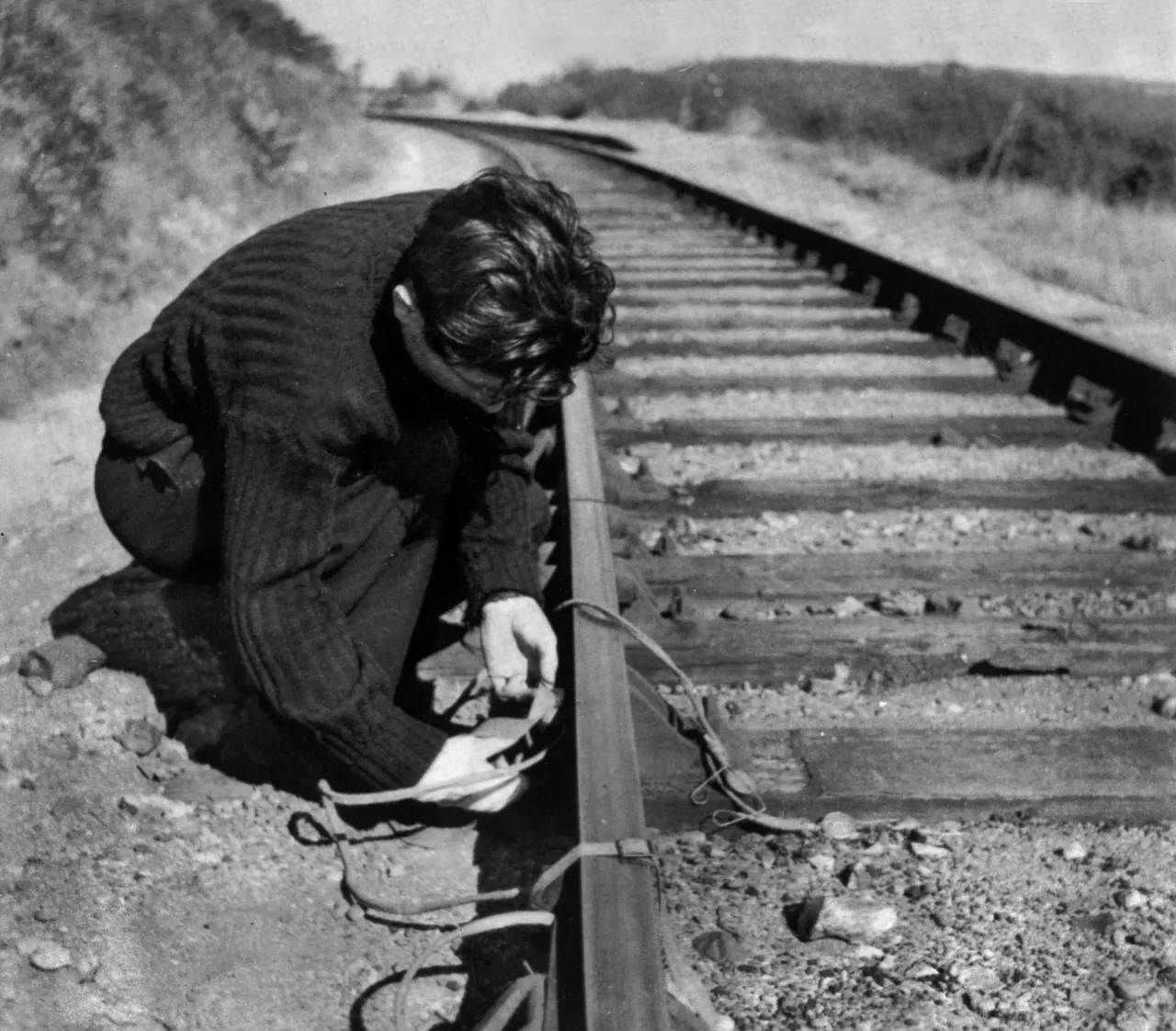
Sabotage is understood as the deliberate destruction of material goods or the intentional reduction of work performance with the purpose of harming a company, an economic system, or a power structure. The origin of the word, which is related to a strike of railway workers in France in the year 1910, who blocked the train tracks, already points to its link with labor struggle. It was also used by the Luddites, textile workers from Nottingham, in campaigns against the machinery that replaced their labor force.
The history of sabotage as a strategy of organized resistance dates back to the workers’ movement of the early 20th century. The Industrial Workers of the World (IWW) defined it as the “collective withdrawal of efficiency” at the point of production, a tactic that consisted of reducing the pace of work or carrying out tasks in a deliberately inefficient manner. During the Second World War, the Iron Resistance, French railway workers with the support of the British Special Operations Executive, turned the sabotage of tracks, bridges, and factories into a key tool to delay the German war effort. It was also possible to see projectiles sabotaged by workers in arms factories during the Spanish Civil War, into which they inscribed messages of solidarity.
A also paradigmatic example is that of the fight against apartheid in South Africa by Umkhonto we Sizwe, or “the spear of the nation” in Galician, when after the Sharpeville massacre, Nelson Mandela and other leaders concluded that the non-violent path was exhausted. In the words of Mandela himself, sabotage “did not involve loss of life and offered the best hope for future race relations”.
With the evolution of social movements, new modalities emerged. Ecosabotage or “monkeywrenching” (from monkey wrench, in English), inspired by the novel The Monkey Wrench Gang, was adopted by groups like Earth First! in the 1980s. Its actions included the disabling of logging machinery or the insertion of metal spikes into trees to prevent their commercial exploitation. These actions would be a form of resistance against ecological destruction.
At present, sabotage continues to be a tool of direct action for various movements. Some examples are Shut the System, which carries out sabotage actions against infrastructures and personnel of companies that they consider complicit in the climate crisis, such as vandalizing Barclays offices or cutting optical fiber cables of insurance companies; or Palestine Action, which carries out direct actions against companies linked to the Israeli genocide against the Palestinian population, such as the Israeli defense company Elbit Systems. In the Spanish State, anti-touristification platforms defend low-intensity sabotage, such as graffiti or the blocking of locks, as legitimate tools of social mobilization. These examples show that, although the techniques and objectives have changed, sabotage persists as a strategy of confrontation that seeks to impose a cost on those who exercise power.
Thus, sabotage is a form of direct action that seeks to exert pressure from below, in contrast to traditional political action or negotiation through representatives. It is a tool of response in situations in which changes through official channels, obeying unjust laws, do not prosper, whereby other paths would be understood as exhausted.
In this way, it should be noted that the accumulation of prior social legitimacy is usually pertinent, so that the justification of the means can be understood.
For militancy and social movements, sabotage remains a complex and controversial tool. From the “withdrawal of efficiency” of the IWW workers to the cyberattacks and infrastructure sabotage of current groups, its essence remains: to impose a consequence on power actors who, otherwise, are indifferent to the harm they cause.
It is, in short, an empowering process, which can restore dignity and hope in the face of defeat when other paths seem useless. It shows that the rival, the system, is vulnerable, that power is, ultimately, logistical, whereby it will be possible to block it.