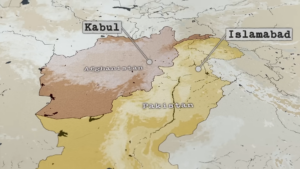
On 27 February 2026, Pakistan’s Defence Minister, Khawaja Asif, announced the start of a military offensive against Afghanistan under the label “open war”. The operation, codenamed “Ghazab lil-Haq” (“Just Fury”), began just one day before the United States and Israel launched their joint offensive against Iran. Since then, while international attention has focused on the Middle East conflict, a silenced war has taken hold on the border between two neighbouring nations that had been strategic allies for decades.
The escalation was not sudden. Since October 2025, border clashes had occurred intermittently, with a ceasefire mediated by Qatar and Turkey that never became consolidated. The immediate trigger was the suicide attacks attributed to the “Tehreek-e-Taliban Pakistan” (TTP), a group that, according to Islamabad, operates with impunity from Afghan sanctuaries. On 26 February, Afghan forces attacked Pakistani military installations on the border, prompting the declaration of war and airstrikes on targets in Kabul, Kandahar and Paktia.
The geopolitical dimension of the conflict is inseparable from the China-Pakistan Economic Corridor (“CPEC”), a central piece of Beijing’s Belt and Road Initiative. Instability on Pakistan’s western border acts as a choke point that raises the risk premium for Chinese investments and forces Islamabad to divert military resources to a front that Beijing considers critical to its commercial expansion. China did not remain aloof: between 1 and 7 April 2026, representatives of Pakistan and Afghanistan met in Urumqi under Chinese mediation, committing to explore a comprehensive resolution of the conflict.
In parallel, Pakistan plays a paradoxical role as mediator in the war between the United States and Iran. On 11 and 12 April 2026, Islamabad hosted the first direct talks between Washington and Tehran since 1979, securing a conditional ceasefire that prevented a wider regional escalation. This dual position (Pakistan is a nuclear power at war with a neighbour and, at the same time, a mediator in a global conflict) underscores the complexity of a board on which the interests of China, Russia, India and the Gulf countries intersect, actors that hold divergent positions on the conflict and on international recognition of the Taliban regime.
The human cost is devastating and silenced. According to the United Nations Assistance Mission in Afghanistan (“UNAMA”), between October 2025 and June 2026, almost 500 deaths of Afghan civilians and 1000 injured from cross-border violence were documented, with a significant escalation in the second quarter of 2026. More than 115,000 people were displaced, and 21.9 million Afghans, including 11.6 million girls and boys, require humanitarian assistance. Trade through Pakistan fell by more than 90% since the closure of the Durand Line in October 2025, worsening a food crisis extending towards 2027.
Sources
-
Awadein, Nouran. “Another war”. Al-Ahram Weekly, 26 de marzo de 2026. https://english.ahram.org.eg/UI/Front/Inner.aspx?NewsContentID=564565
-
Telegraph India. “Timeline of recent clashes between Pakistan and Afghanistan: October 2025 to March 2026”, 17 de marzo de 2026. https://www.telegraphindia.com/world/timeline-of-recent-clashes-between-pakistan-and-afghanistan-october-2025-to-march-2026/cid/2151818
-
Times of India. “Double standards: Pakistan rejects UN report on civilian casualties in Afghanistan strikes”, 10 de setembro de 2026. https://timesofindia.indiatimes.com/world/pakistan/double-standards-pakistan-rejects-un-report-on-civilian-casualties-in-afghanistan-strikes/affcmtoi_articleshow/132806553.cms
-
ACAPS. “Anticipatory note: Anticipated impacts of the Middle East and Pakistan–Afghanistan conflicts on trade and associated humanitarian needs”, 10 de xuño de 2026. https://reliefweb.int/report/afghanistan/acaps-anticipatory-note-anticipated-impacts-middle-east-and-pakistan-afghanistan-conflicts-trade-and-associated-humanitarian-needs-10-june-2026
-
Associated Press of Pakistan. “Pakistan’s diplomatic breakthrough: Islamabad peace process averts wider ‘Middle East War’”, 18 de abril de 2026. https://www.app.com.pk/business/pakistans-diplomatic-breakthrough-islamabad-peace-process-averts-wider-middle-east-war/
-
Anadolu Agency. “Is the Afghan-Pakistani conflict an engineered front?”, 2 de abril de 2026. https://www.aa.com.tr/en/opinion/opinion-is-the-afghan-pakistani-conflict-an-engineered-front/3889322
-
OHCHR. “Afghan–Pakistani border: UN experts urgently call for lasting peace”, 24 de marzo de 2026. https://www.ohchr.org/en/press-releases/2026/03/afghan-pakistani-border-un-experts-urgently-call-lasting-peace