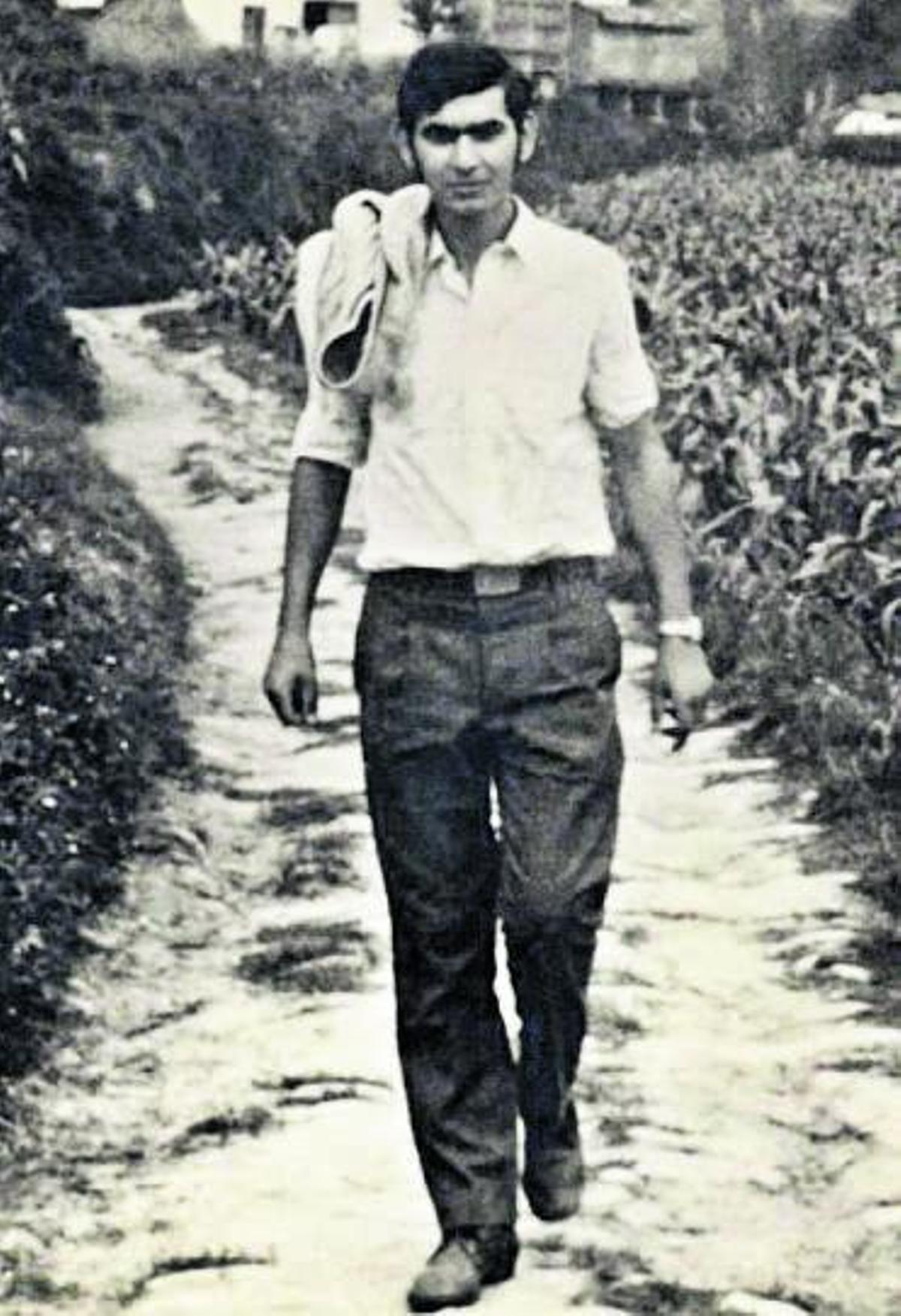
On 12 August 1975, 51 years ago today, the fascist regime, already in its death throes but as bloodthirsty as ever, cold-bloodedly murdered one of the most lucid consciences of the Galician working class. Franco would die months later, but Moncho Reboiras would not live to see it. He neither begged for mercy nor went into hiding: he confronted the dictatorship with the tool of trade union organisation. His true subversion, beyond the armed legend, was the weaving of the Sindicato Obreiro Galego (Galician Workers’ Union, SOG), the embryo of today’s CIG, a collective structure that Francoism tried in vain to stab to death.
Born into a farming family in Dodro and raised in the working-class ferment of Teis, in Vigo, Reboiras learned that labour exploitation and national oppression were two sides of the same coin. Guided by Father Seixas and Méndez Ferrín, and at just 19 years old in the UPG, he rose up against a system that condemned Galicians to poverty and subjugation. His ability to organise resistance made both the employers’ association and the political police tremble, and they soon had him in their sights.
The historic 1972 strike in Vigo marked him to the core. The brutal persecution, with constant raids and threats, did not intimidate him; it drove him to criss-cross the country in his Seat 600, fighting factory by factory against the regime’s vertical trade unionism. Reboiras did not compromise with the dictatorship: he built alternative power structures to bring it down. He promoted the boycott of the fraudulent elections to the Vertical Syndicate and shaped a national and class-based unionism that broke the Francoist hegemony within the labour movement.
Galician culture was for him the other great axis of struggle. He coordinated the Fronte Cultural Galega (Galician Cultural Front) to turn language and art into trenches of dignity in a besieged country. When the Brigada Político Social (Social Political Brigade) cornered him in Ferrol, Reboiras had a clear path to escape, but he chose to cover his comrades’ retreat rather than save his own life. Cornered in the doorway of 27 Rúa da Terra, he was shot down from behind in an act of treachery, at point-blank range. It was not a chance “shot in the air”: it was a premeditated and cowardly execution. Moncho Reboiras fell at the age of 25, but his legacy, alive in combative trade unionism, remains a pin driven into the silenced memory of the anti-fascist resistance.