Memory and political awareness: dismantling systems of extermination
with No Comments

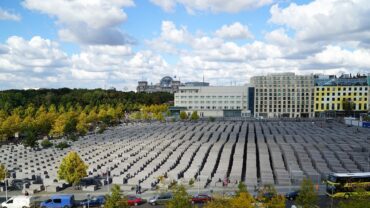
  January 27, International Holocaust Remembrance Day, commemorates the victims and highlights the planned mechanisms of systematic oppression. The Holocaust was not a random act, but an organized and bureaucratized process, as historical documentation on the systematic identification and persecution of Jews and other groups by the Nazis shows. This pattern of violence can also be seen in other recent genocides and ethnic cleansing, such as in Rwanda, Srebrenica, and Myanmar. During World War II, state technology and administrative systems … Read more

Atlas of Stateless Nations in Europe: Cartographies of Resistance
with No Comments

  By mapping identities without sovereignty, a break in the uniform narrative of nation states is revealed. Atlas of Stateless Nations in Europe (2017), by Breton researcher Mikael Bodlore-Penlaez, provides a precise geopolitical catalog of indigenous, national, and cultural movements demanding autonomy from the Basque Country to Lapland. Through detailed maps and historical analysis, the book breaks down the mechanisms of cultural homogenization to highlight realities such as those of the Sorbs in Germany or the Veneti in Italy. The … Read more

Occupy This Album: Music as protest against economic inequality
with No Comments

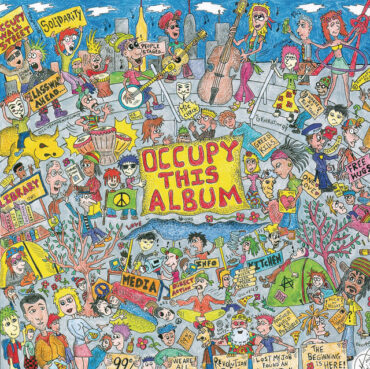
When art stands as a collective voice, its resonance can be transformed into action. In 2012, the album Occupy This Album: 99 Songs for the 99 Percent crystallized this synergy between musical creation and social commitment. Compiling songs by artists such as Tom Morello, Patti Smith, and Ani DiFranco, the project not only spread criticism of the concentration of wealth, but also donated its profits to support the Occupy Wall Street movement. It was born during the struggle between emerging … Read more

Control of mineral resources in Palestine: analysis of a prolonged occupation
with No Comments

  Since the occupation of the West Bank and Gaza in 1967, Israel has exercised structural control over the natural resources of the occupied Palestinian territories. This control, widely documented by international bodies and human rights organizations, affects the exploitation of strategic resources such as stone and aggregate quarries, phosphates, underground aquifers, and natural gas off the coast of Gaza, severely limiting Palestinian communities’ access to their own wealth. In the West Bank, most of these resources are located in … Read more

Sleep Now in the Fire: RATM’s Cry Against Neoliberal Globalization
with No Comments

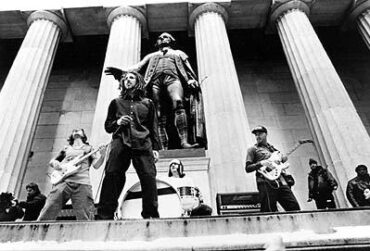
“Sleep Now in the Hole” (2000), by the American band Rage Against the Machine, is a denunciation of the commodification of democracy. The song, produced by Rick Rubin, was recorded in October 1999 amidst growing global unrest: weeks before the Battle of Seattle erupted and the IMF imposed draconian austerity measures on 42 countries. The music video, directed by Michael Moore, was filmed in January 2000 at the New York Stock Exchange. It was an act of calculated civil disobedience: … Read more

Seattle ’99: The Cry of Disobedience that gave birth to the Anti-Globalization Movement
with No Comments

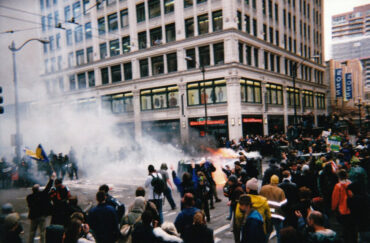
The Battle of Seattle, which took place between November 30 and December 3, 1999, during the World Trade Organization (WTO) meeting, marked a turning point in the struggle against global capitalism. The mobilization brought together more than 50,000 activists and militants from unions, environmental movements, student groups, and anarchist organizations in an unprecedented convergence that paralyzed the city. The objective was clear: to dismantle the myth of neoliberal inevitability through creative direct action. The origin lies in the accumulation of … Read more

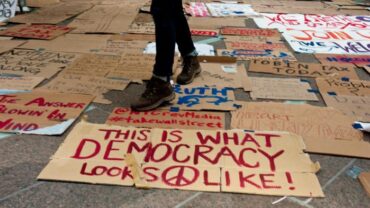
This Is What Democracy Looks Like. Documentary on Seattle ’99 and the Anti-Globalisation Movement
with No Comments

The documentary This Is What Democracy Looks Like (2000), directed by Jill Friedberg and Rick Rowley, captures the essence of the protests against the World Trade Organisation (WTO) in Seattle in November 1999. Filmed on location with cameras provided by activists, the film compiles first-hand accounts of demonstrations that brought together more than 50,000 people from all walks of life and backgrounds (from trade unionists to environmentalists, from First Nations groups to anarchists) in what was a key turning point … Read more

Key Concepts. Violence, vandalism, terrorism, and non-violence.
with No Comments

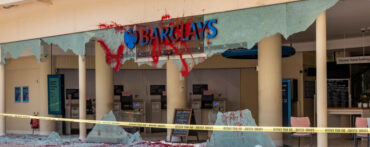
The power structure has historically sought to associate protest and dissent with violence by using different concepts as synonyms, thus equating violence with dissent and non-violence with reformist processes. Five key concepts will therefore be distinguished below: Violence. Violence is understood as the deliberate use of physical or psychological force against individuals, groups or communities with the intention of causing harm. Galtung distinguishes between three levels: Direct violence. Explicit acts involving actions that cause physical or psychological harm to individuals … Read more

Let’s walk together! Let’s stand up to government and corporate abuse!
with No Comments

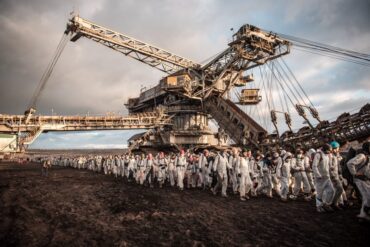
We are not spectators! We are responsible for what happens in the immediate reality around us! We are the organized resistance against a system that devastates communities, plunders ecosystems, and strips human life of dignity. Every day we must walk together, guided by the idea that only continuous, organized, and united action will stop the abuses of the predatory machinery of transnational corporations, which are so well protected by the actions or complicit passivity of state governments and international organizations. … Read more

AMERICA: TRUTH, JUSTICE AND REPARATION
with No Comments

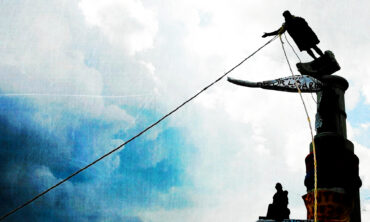
In recent years, the rejection by the Latin American population, especially indigenous people, of what “Hispanic Day” represents has grown steadily. This has manifested itself in many ways: demolition of statues, removal of street names, transformations of the October 12 celebration, etc. All this is motivated by the awareness of the horrors committed by such sinister characters as Christopher Columbus, Pizarro or Hernán Cortés, who committed crimes that today would be judged as against humanity1, as well as by indigenous … Read more

1 2 3 4 15