Leisure is not a neutral territory. Since the early 20th century, board games have functioned as a space of ideological dispute, where economic and social behaviors are shaped. The current wave of resistance games revives a forgotten tradition: using dice and cards not to accumulate fictitious capital, but to build social imaginaries (that is, ways of organizing and interpreting reality) based on the common good and solidarity.
The origin of this movement can be traced to the work of American designer Elizabeth Magie, who in 1903 patented The Landlord’s Game. Far from being a simple pastime, her creation included two sets of rules: a competitive one (which showed how monopoly ruins the majority) and a cooperative one, in which all players benefited from the development of the board. The context of the Progressive Era in the United States, marked by tensions against large monopolies, explains the pedagogical intent of the game. However, the version that became popular during the Great Depression was the competitive one, marketed by Parker Brothers as Monopoly, after acquiring the rights from Magie for a symbolic sum.
This appropriation of critique by the market did not prevent the emergence of alternatives. During the Cold War, university professor Bertell Ollman released Class Struggle in 1978, a game in which the player’s social class was determined by the roll of a die at birth and in which the working class faced the capitalist class on a board filled with Marxist references. The game sold over two hundred thousand copies despite boycotts, demonstrating the existence of an audience interested in alternative ludic narratives to hegemonic ones.
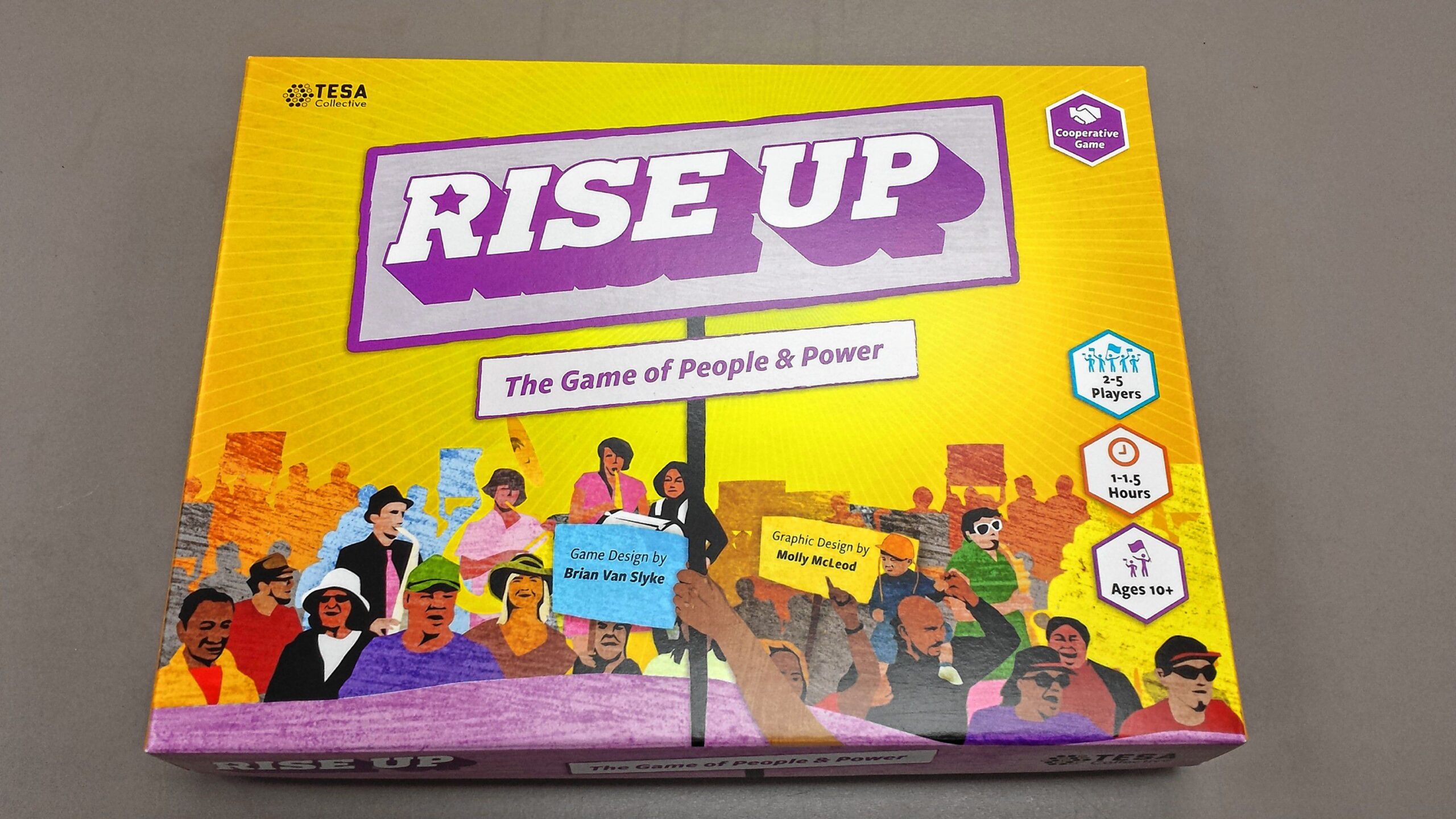
In the 21st century, game mechanics have become more sophisticated. Bloc by Bloc: The Insurrection Game, created by Rocket Lee and Tim Simons after the 2009 Oakland riots, simulates neighborhood self-organization in the face of police brutality and gentrification. The game requires coordination between asymmetric factions (students, working class, and prisoners) to liberate the city, incorporating internal tensions that reflect real debates within social movements. Meanwhile, Rise Up! The Game of People & Power adopts a cooperative narrative strategy to build popular power against an abstract oppressive system.
These proposals share a common goal: to challenge the competitive individualism internalized through mass leisure. By modifying the conditions for victory (from the ruin of the opponent to collective well-being), these games invite players to rehearse strategies of mutual aid in a safe space. The gaming experience thus becomes a laboratory for experimenting with the idea that prosperity is only possible when it is shared.
At a time when gamification is often used to increase labor productivity or encourage consumption, these games propose playing as a way to imagine other worlds and other forms of coexistence.
References
-
Waging Non Violence (People Powered News & Analysis) (2028). 7 resistance-themed board games to strengthen your injustice-fighting skills. https://wagingnonviolence.org/2018/03/7-resistance-themed-board-games/
-
Mujeres con Ciencia. Elizabeth Magie Phillips (1866-1948) .https://mujeresconciencia.com/2017/04/14/elizabeth-magie-phillips-1866-1948/
-
The Guardian (2015). The secret history of Monopoly: the capitalist board game’s leftwing origins. https://www.theguardian.com/lifeandstyle/2015/apr/11/secret-history-monopoly-capitalist-board-game-leftwing-origins
-
Out of Order Games (2016). Bloc by Bloc: The Insurrection Game. https://www.outofordergames.com/blocbybloc/
-
BoardGameGeek (2017). Rise Up! The Game of People & Power. https://boardgamegeek.com/boardgame/228478/rise-up-game-people-power
-
BoardGameGeek (1978). Class Struggle. https://boardgamegeek.com/boardgame/1510/class-struggle