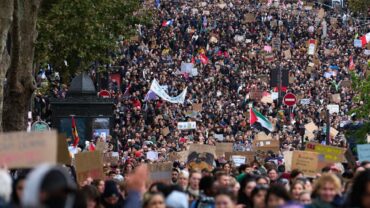
When the streets breathe again: from reactionary growth to the left’s counter-offensive (II)
with No Comments

The manipulation of electoral processes (especially those intervened in by Israel and the US) and the alteration of the agenda and of the majority’s perception of reality by the big tech companies through their instruments (AI, bots, algorithms…) make it clear that the battle is no longer fought only at the ballot box, but depends largely on algorithms. In Brazil, Meta was sanctioned by the Superior Electoral Court following a complaint from Lula’s campaign for limiting the reach of its … Read more
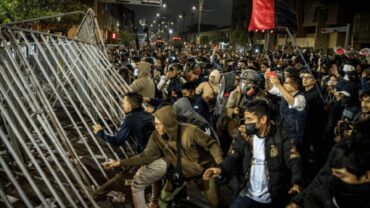
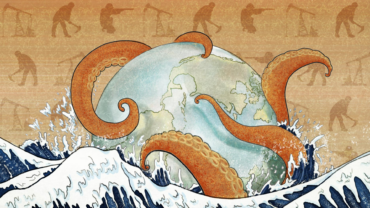
When the streets breathe again: from reactionary growth to the left’s counter-offensive (I)
with No Comments

Over the last decade, global politics has been marked by a reactionary tide that, taking advantage of the fatigue of the progressive cycle that followed the 2008 crisis, institutional wear, economic discontent and the manipulation brought about by new technologies, advanced over social rights and democracy. However, recent events in 2026 (from the ballot boxes to the streets) seem to be beginning to sketch out a change of cycle that had already been glimpsed sporadically since the end of 2024. … Read more

Imperialism. Political Factors
with No Comments

Imperialism cannot be explained by the search for markets alone. Competition between powers, national prestige and control over routes and resources shaped a global system of domination whose logics persist today in renewed forms. Between 1884 and 1914, European powers partitioned around a quarter of the planet’s surface. Geopolitical rivalry between powers acted as one of the central drivers of that process, which led to the partition, plunder and exploitation of Africa and Asia in a process that combined economic … Read more

End the Regime of ’78, build a popular democracy
with No Comments

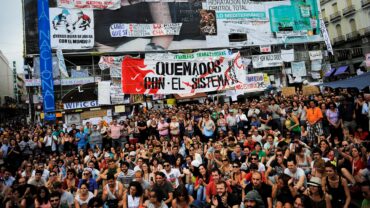
The Spanish State, as is the case throughout the West, is characterised by experiencing a moment of strong social tensions due to the dismantling of the welfare state. It must be borne in mind, however, that the Spanish State has its own particular features that strangle the democratic system, for it has an institutional architecture designed to preserve the status quo inherited from Francoism under an appearance of constitutional normality. The regime of ’78, as this system is popularly known, … Read more

“No”: Advertising against fear, or how Chile ousted Pinochet
with No Comments

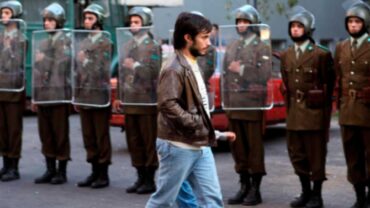
On 5 October 1988, the dictator Augusto Pinochet submitted his continuation in power to a plebiscite designed to legitimise his regime. The Chilean citizenry, after fifteen years without elections, responded with historic turnout and a result that opened the door to democracy. The military regime had made the 1980 Constitution its framework for institutionalisation. The twenty-seventh transitional provision established that, at the end of the presidential term, the Military Junta would propose a single candidate for a new eight-year mandate, … Read more

Winning the Narrative! Manual to combat the far-right discourse. (III). What is the psychology of far-right people?
with No Comments

This text is part of the contents of the first book by ECOAR))) and will go on sale at the end of this year, 2026. Winning the Narrative! Manual for Combating the Far-Right Discourse. The far-right is more than a political ideology. Behind its discourses, symbols, and rituals, there exists a deep psychological structure that connects individual vulnerabilities with collective dynamics. Understanding this profile is not a theoretical exercise but a central element in being able to counter its discourse. … Read more

“The Trial of the Chicago 7”. The story of the trial that shook the United States status quo
with No Comments

In October 2020, in the midst of social and political upheaval, “The Trial of the Chicago 7” was released, a film that quickly garnered critical acclaim and received six Academy Award nominations, including Best Picture. Director Aaron Sorkin took up a project that Steven Spielberg had conceived more than a decade earlier and built a gripping allegory about justice and dissent in a divided United States. The film, featuring Sacha Baron Cohen, Eddie Redmayne, Yahya Abdul-Mateen II, Mark Rylance and … Read more

Moncho Reboiras, working-class defiance that fascism could not silence
with No Comments

On 12 August 1975, 51 years ago today, the fascist regime, already in its death throes but as bloodthirsty as ever, cold-bloodedly murdered one of the most lucid consciences of the Galician working class. Franco would die months later, but Moncho Reboiras would not live to see it. He neither begged for mercy nor went into hiding: he confronted the dictatorship with the tool of trade union organisation. His true subversion, beyond the armed legend, was the weaving of the … Read more

“Occupy, Resist, and Produce”: The Take and the Recovered Factory Movement
with No Comments

The Argentine economic crisis of 2001, the result of two decades of savage neoliberalism, left the country in ruins. The industrial fabric was dismantled and public companies were privatized. The financial “corralito” froze bank accounts, capital flight exceeded 40 billion dollars, and factories closed their doors in a succession of mass layoffs that impoverished the population. In this context of crisis and political corruption, a wave of solidarity also emerged, in which workers from different factories and companies decided to … Read more

Watergate: political espionage and the impunity of power
with No Comments

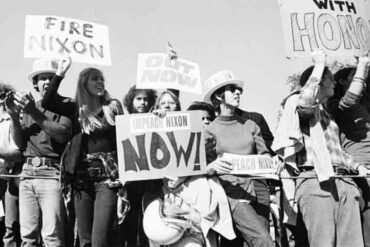
On August 8, 1974, 51 years ago today, the President of the United States of America, Richard Nixon, announced in a televised address from the Oval Office his resignation from office, preempting the impeachment process. He was the first president in that country’s history to take that step, and the reason was the scandal known as Watergate—the famous case of political espionage that brought to the fore the workings of what was supposed to be a democracy and shook the … Read more

1 2 3 4 … 17